
The internet is full of hair care advice. Some of it is helpful, but a surprising amount is outdated, misleading, or completely false. Many women spend years following hair care “rules” that actually make their hair harder to manage, more prone to breakage, or more difficult to grow.
As a hairstylist, I often meet clients who are frustrated because they have been doing everything they thought was right and still are not seeing the results they want.
Let’s clear up some of the most common hair care myths and focus on what actually helps create healthier, stronger, and more manageable hair.

Myth #1: Cutting Your Hair Makes It Grow Faster
This is probably one of the most common hair myths of all time.
Hair grows from the scalp, not from the ends. Getting a haircut does not directly increase your growth rate. However, regular trims help remove split ends and prevent breakage, which allows you to retain more length over time.
This is why people often feel like their hair grows better when they trim it regularly. The growth rate has not changed, but the ends are healthier.
If you are trying to grow your hair longer while minimizing breakage, you can book a professional haircut or consultation to create a maintenance plan that supports your goals.
Myth #2: Washing Your Hair Every Day Causes Hair Loss
Many people avoid washing because they think it causes shedding. In reality, washing does not create hair loss.
The strands you see in the shower were already in the natural shedding phase. Washing simply removes hairs that were ready to fall out.
For some people, daily washing is unnecessary. For others, especially those with oilier scalps, regular cleansing supports a healthier scalp environment.
The right washing schedule depends on your hair and scalp, not social media trends.
Myth #3: Expensive Products Automatically Work Better
Price does not always equal performance.
Many women spend hundreds of dollars on products that are completely wrong for their hair type. A product can be expensive and still create buildup, dryness, or unnecessary weight.
The best products are the ones that address your specific needs, not necessarily the ones with the highest price tag.
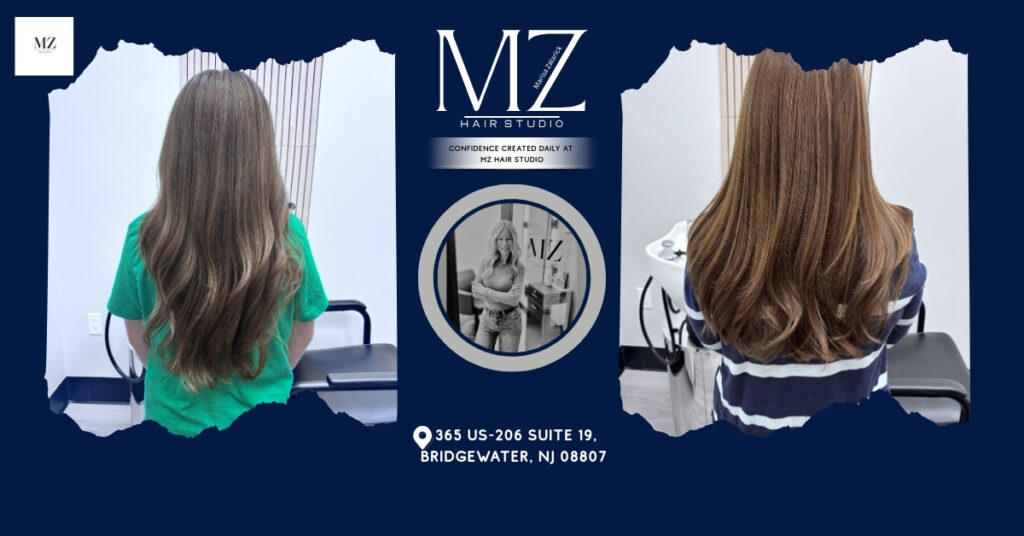
If you want to see what healthy, balanced hair looks like with the right maintenance routine, you can browse examples in my hair portfolio.
Myth #4: You Can Permanently Repair Split Ends
Many products claim to repair split ends permanently. Unfortunately, once a strand splits, it cannot truly fuse itself back together.
Some products temporarily smooth and seal the appearance of split ends, which can improve manageability. However, the only permanent solution is removing the damaged portion.
Regular maintenance trims help prevent splits from traveling higher up the hair shaft.
Myth #5: Brushing Your Hair 100 Times a Day Makes It Healthier
This advice has been around for decades, but excessive brushing often causes more harm than good.
Too much brushing creates friction and unnecessary stress, especially on fragile or chemically processed hair.
Gentle detangling is beneficial. Excessive brushing is not.

Myth #6: Air Drying Is Always Healthier Than Blow Drying
Many people assume air drying is automatically the healthiest choice. While excessive heat can certainly cause damage, air drying is not always better.
Hair remains in a vulnerable state while wet. Depending on your hair type, staying wet for extended periods can create its own issues.
The healthiest approach is usually a balanced one that considers technique, temperature, and overall hair condition.
My approach focuses on realistic, sustainable hair care rather than one size fits all advice, which you can learn more about on the about MZ Hair Studio page.
Myth #7: Natural Products Are Always Better
The word “natural” does not automatically mean safer or more effective.
Some natural ingredients can be wonderful for hair, while others may not suit your specific needs. Likewise, many professionally formulated products contain beneficial ingredients that have been thoroughly tested for performance and consistency.
The focus should be on what works for your hair, not marketing labels.
Myth #8: Oily Hair Means Your Hair Is Healthy
Oil production and hair health are not the same thing.
Someone can have oily roots and very dry ends at the same time. Likewise, a person with a drier scalp can still have strong, healthy hair.
Understanding the difference helps prevent over washing, under washing, or choosing products that create imbalance.
Myth #9: Hair Stops Growing at a Certain Length
Hair growth does not simply stop once it reaches a particular point.
What often happens is that breakage catches up with growth. The hair continues growing at the scalp, but weakened ends break off before additional length becomes visible.
This creates the appearance of stalled growth when the real issue is retention.
If you are struggling with length retention, you can always reach out through the contact page for guidance.

Myth #10: More Products Mean Better Results
Many women believe adding more products will solve every hair problem.
In reality, overloading the hair often creates buildup, weighs down volume, and interferes with moisture balance. Sometimes the best thing you can do is simplify your routine.
Healthy hair is usually the result of consistency, not complexity.
The Truth About Healthy Hair
Healthy hair rarely comes from chasing trends or trying every new product that appears online. It comes from understanding your hair type, maintaining realistic habits, and focusing on long term consistency.
Small adjustments often create better results than dramatic changes.
When you are ready to create a personalized plan for healthier, stronger, and more manageable hair, you can book your appointment online.
Continue Learning About Hair Health
The more you understand how hair actually works, the easier it becomes to avoid common mistakes and build a routine that supports your goals.
For more practical advice on hair growth, moisture balance, color maintenance, breakage prevention, and everyday styling, explore additional articles on the MZ Hair Studio blog.